
Ramble On
But the ceasefire needs to become a peace pact

I may have mentioned in one of the posts here that there are a few voices I’d like to steal in my next life fronting a blues/rock band. One of them is Robert Plant of Led Zeppelin and he came to mind as I surveyed this week’s improvements across my dashboard. I also got revved up by his live Late Show performance of Ramble On with his other-worldly ensemble, Saving Grace.
Announcement of a ceasefire in the Middle East was the rocket fuel that markets had been hoping for. US equity indices all finished at least 3% higher on the week and the international side was even better with the exception of China. Short volatility was the play of the week with SVIX finishing better by more than 11%.
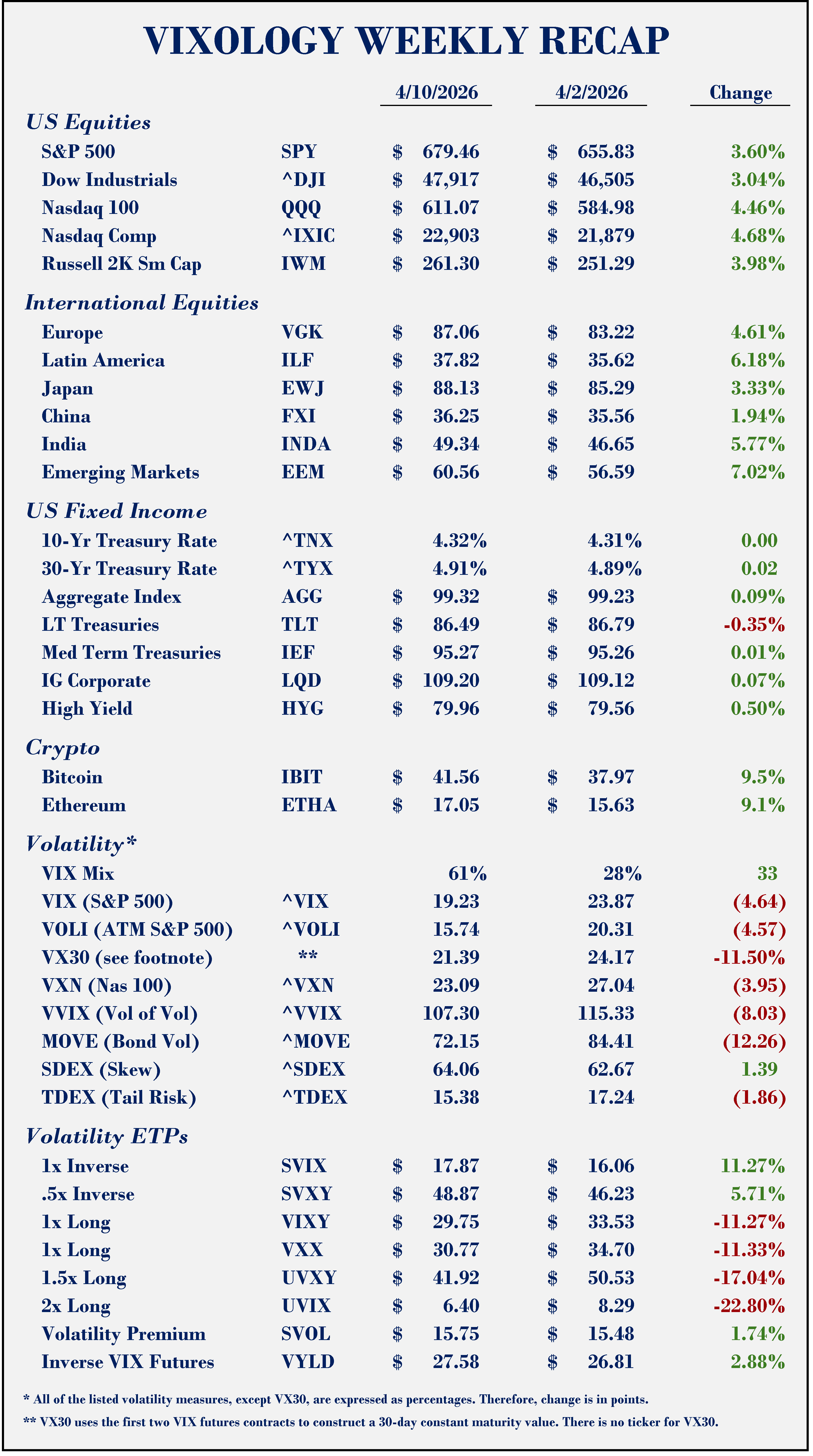
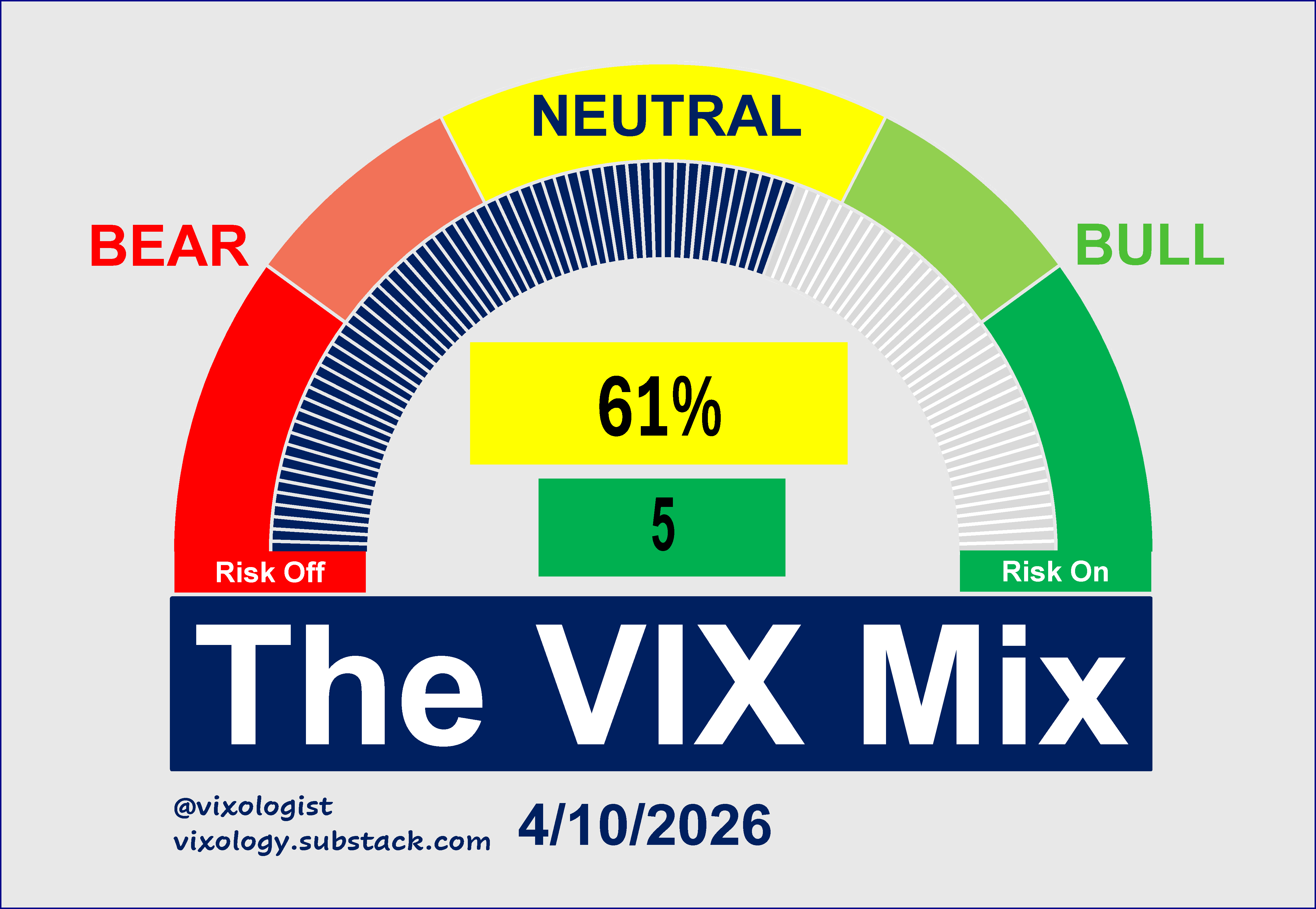
The VIX Mix was seen running along with equity markets and finished the week up 33 points to a not-quite bullish 61% (the green border sits at 65%). Bullish indicators moved from zero to nine while the bearish count fell from 12 to three.
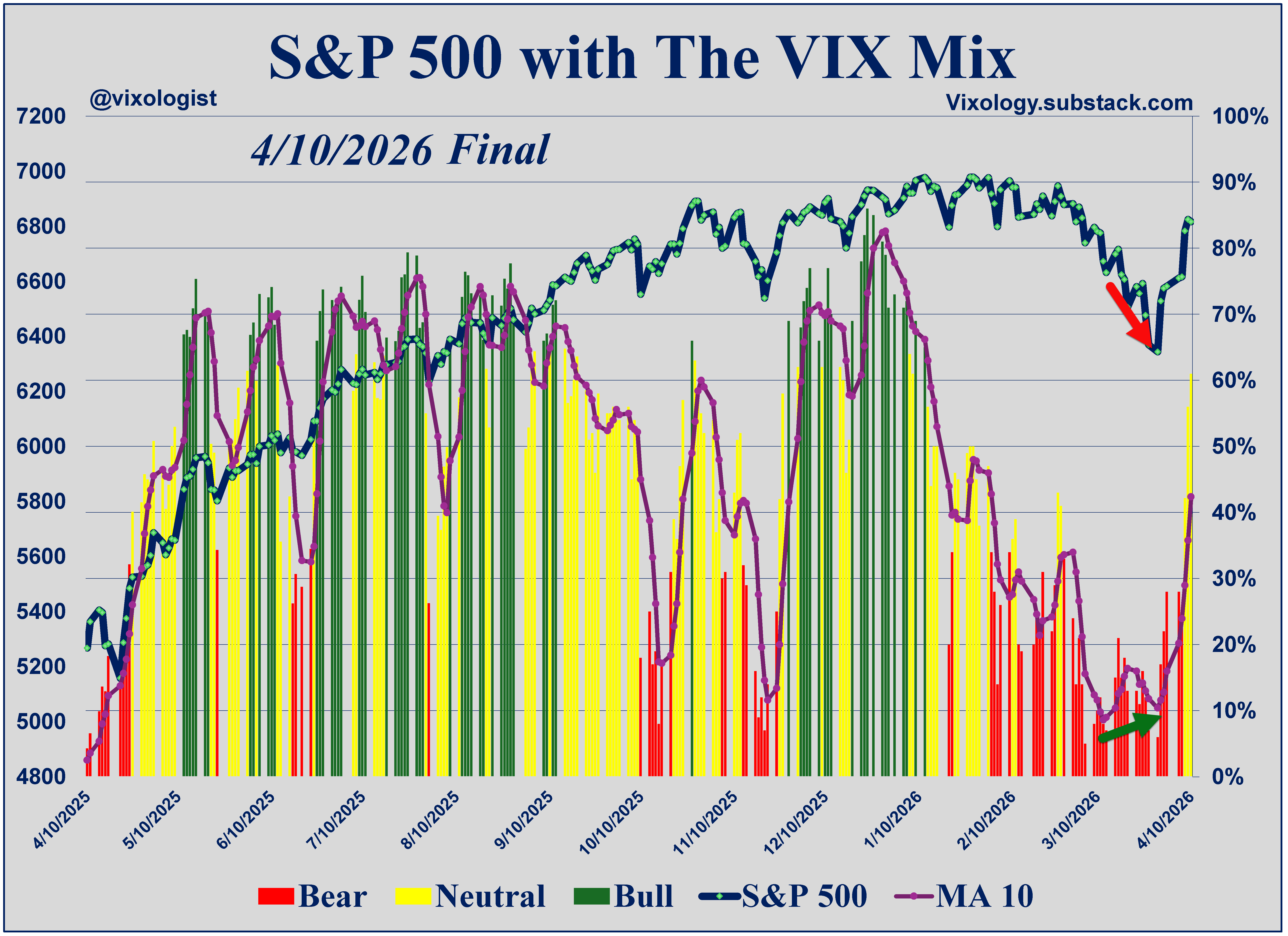
It looks promising that the streak of 61 trading days since the last bullish reading may finally be broken next week. Regular readers have noticed the 10-day moving average we added to the chart below to give us a better sense of the trend in our sentiment gauge. Feel free to accuse us of cherry-picking, but we’ve annotated the combination of a lower low for SPX with a higher low from the Mix trend line. We’ll be doing a full research project on the potential value of signals like this.
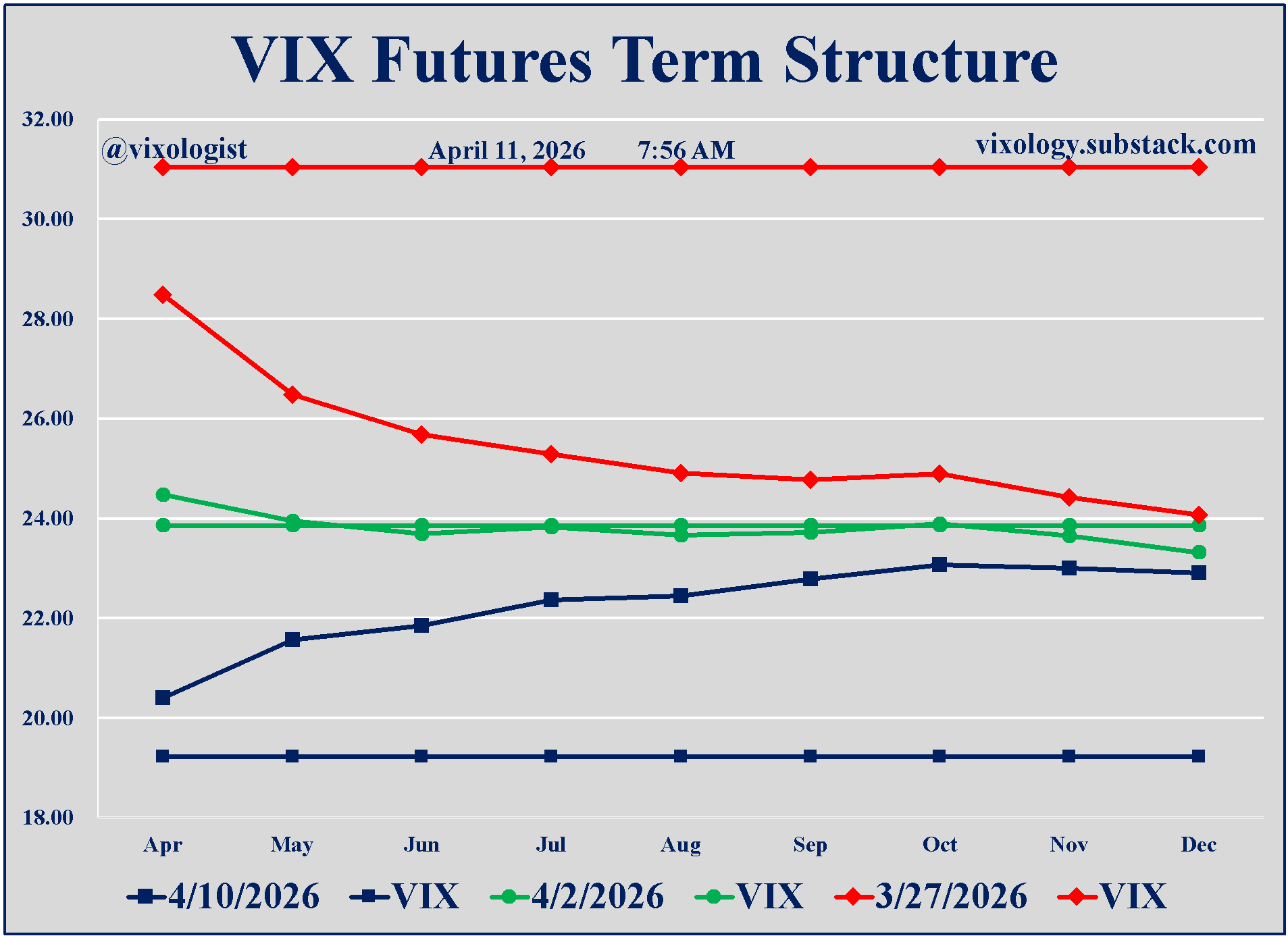
The VIX futures term structure illustrates the dramatic change over the last three weeks. March 27th looked horrible! As we reached the three-day Easter weekend, spot VIX and the futures had reached a neutral state - not exactly bullish except when compared with the week before. Roll forward to Friday’s finish and the view is decidedly bullish - spot VIX under the futures that are in contango, albeit with less than three points from low to high.
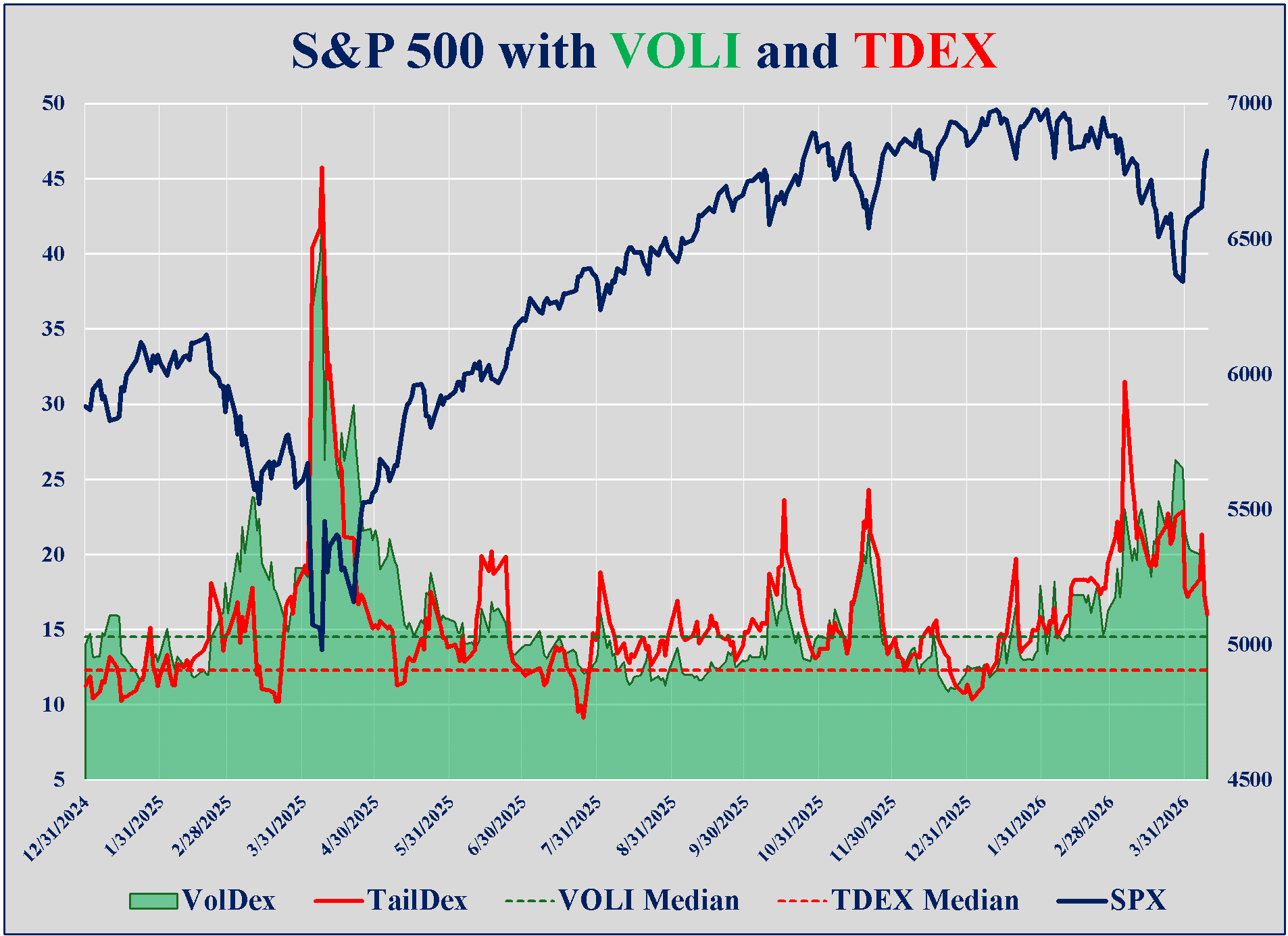
Let’s finish with a chart you likely won’t see anywhere else. My friends at Nations Indexes track some unique measures of risk, including VolDex (VOLI) and TailDex (TDEX). VOLI compares with VIX but uses only at-the-money options to measure implied volatility. TDEX is a look at the cost of a SPY put option two standard deviations out of the money - what investors are paying to protect against a tail event.
What’s interesting to me about the recent action is how TDEX spiked and peaked early in the Middle East conflict and did not come close to that level when SPX hit bottom. TDEX peaks tend to line up with SPX bottoms, but this time investors felt that the peak risk had passed. That proved to be bullish. At the same time, those hedges shifted to at-the-money positioning (VOLI) that would start to pay right away.
Gurus and pundits are offering up all sorts of predictions about the Middle East ceasefire. The outcome will certainly matter. Markets have turned bullish and FOMO is making its first appearance in a while. We certainly hope that a peaceful outcome can be negotiated. But hope is not an investment strategy. Back to what Jason Zweig recently said: Don’t do anything that can’t be unwound quickly with minimal cost.
All content presented here is for informational and educational purposes only. Distribution of any content to any persons other than the recipient is unauthorized. Furthermore, any alteration of content presented here is prohibited. By accepting delivery of this presentation, the reader agrees to the foregoing. Certain information presented herein has been obtained from third-party sources considered to be reliable, but there is no guarantee of completeness or accuracy and it should not be relied upon as such. There is no obligation to update or correct any information presented. Readers should not treat any statement, opinion or viewpoint expressed herein as a solicitation or recommendation to buy or sell any security or follow any investment strategy. This material does not consider the investment objectives, financial situation, or needs of any particular reader. Readers should seek advice from a qualified financial or investment advisor prior to making any investment decision.